
June 18, 2026
Menopause Weight Gain: Why Eating Less, Exercising More Isn’t Working
If you’re in your 40s, 50s or beyond, this might sound familiar.
You’re eating less than you used to. You’re making healthier choices. Maybe you’ve cut back on alcohol, started walking more, or even gone back to the eating plan that worked brilliantly a few years ago.
And yet, somehow, the weight around your middle seems harder to shift, your clothes feel tighter, and your body feels completely unresponsive to all your efforts.
I know this feeling personally.
For a long time, I thought I simply needed to try harder. Be stricter. Eat less. Exercise more.
But what I eventually learned, and what so many women are never told, is that midlife weight gain isn’t simply about calories in versus calories out.
What’s happening is often a hormonal and metabolic shift that changes the way your body responds to food, exercise, stress and even sleep.
According to one study, the average weight gaining perimenopause was 5lbs, with 20% of women gaining 10lbs or more.
Understanding that can be incredibly freeing.
Because once you understand what’s happening, you can stop blaming yourself and start working with your body instead of against it.

Why Your Body Starts Playing by Different Rules
One of the biggest surprises for many women is discovering that the strategies that worked in their 20s and 30s often don’t work in the same way after 40.
During perimenopause and menopause, hormone levels begin to change, particularly oestrogen. And while we often hear about oestrogen in relation to hot flushes or mood changes, it also plays an important role in how the body regulates blood sugar, stores fat and uses energy.
When oestrogen levels are higher, the body generally:
- Processes glucose more efficiently
- Stores less visceral fat around the organs
- Responds more predictably to food and exercise
As oestrogen declines, that balance can become less stable.
At the same time, insulin, the hormone responsible for managing blood sugar, may become less effective, encouraging more energy to be stored as fat, particularly around the middle. Hello, menopause belly.
Cortisol, our stress hormone, can also become more reactive and remain elevated for longer.
This means that everyday challenges such as poor sleep, work stress, caring responsibilities and the general mental load of life can have a bigger impact on weight and body composition than they once did.
This is simply biology adapting to a new hormonal environment.
Not failure.
Not laziness.
Not a lack of willpower.
Why “Eat Less, Move More” Doesn’t Always Work
This is often the most frustrating part.
Because on paper, it seems like eating less should automatically lead to weight loss.
The problem is that the body doesn’t just respond to calories. It also responds to stress.
When calories are cut too aggressively, the body can interpret that restriction as another form of stress. And if cortisol levels are already elevated because of hormonal changes, adding further stress through dieting may work against you.
The cycle often looks something like this:
- You eat less
- Your body senses stress
- Cortisol rises
- Energy conservation increases
- Fat storage becomes more stubborn, particularly around the middle
So, the strategy that worked perfectly ten years ago may no longer deliver the same results.
The maths hasn’t changed.
Your hormonal environment has.
Working With Your Body, Not Against It
The answer isn’t endless restriction.
It’s giving your body the support it needs to adapt to the changes that are taking place.
That starts with focusing on food quality, blood sugar balance, muscle preservation and sustainable habits rather than obsessing over calories.
That is exactly what I focus on.
To help women support their bodies through this stage of life with habits that are realistic, sustainable and effective.
Not about restriction.
Not about chasing “skinny.”
But about helping your body feel nourished, steady and strong again.
The Menobelly Reset: The Core Foundations
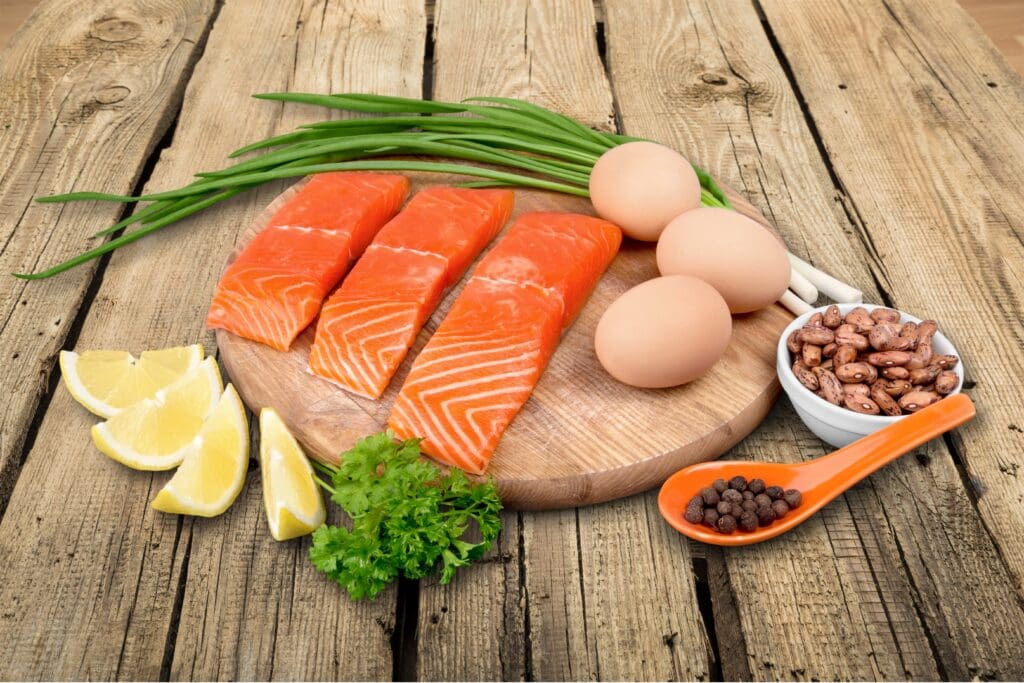
1. Prioritise Blood Sugar Balance
Every meal should include:
- Protein
- Fibre
- Healthy fats
- Carbohydrates paired with protein or fats
This isn’t just about calories. It’s about creating a steadier hormonal response to food and avoiding the blood sugar spikes and crashes that can drive cravings and energy dips.
2. Create a Consistent Eating Rhythm
We want to support insulin sensitivity and reduce the constant grazing that many women fall into when life gets busy.
A simple structure might look like:
- A 12–14 hour overnight fast (for example, 7pm to 9am)
- Three balanced meals each day
- An optional protein-based snack if genuinely needed
- Avoiding regular meal skipping, particularly breakfast and lunch
The goal isn’t perfection.
It’s consistency.
3. Put Protein First
Protein becomes even more important as we get older.
Aim for around 25–35g of protein at each meal where possible.
Protein helps support:
- Muscle maintenance
- Blood sugar balance
- Appetite control
- Energy levels
Many women are unknowingly under-eating protein, which can contribute to fatigue, cravings and loss of muscle mass.
4. Focus on Anti-Inflammatory Foods
Try to reduce:
- Ultra-processed foods
- Refined sugar
- Alcohol, particularly during reset phases
And increase:
- Omega-3-rich foods
- Colourful fruits and vegetables
- Fibre-rich plant foods
These changes can help support overall wellbeing and reduce some of the internal stressors that may be contributing to fatigue and weight-management challenges.
Why Strength Training Became a Non-Negotiable for Me
For years, I thought cardio was the answer.
Walk more. Move more. Burn more calories.
But after 40, I started learning that muscle is one of the most powerful tools we have for supporting our metabolism, improving insulin sensitivity and protecting our long-term health.
I’ll be honest, I avoided the weights area of the gym for ages. I found it intimidating and assumed it wasn’t really for me.
But once I started incorporating strength training into my routine, I noticed a real difference. I felt stronger, more capable and had more energy throughout the day.
What’s encouraging is that I’m now seeing more and more women in midlife embracing strength training too. The message is finally getting out: lifting weights isn’t just about changing how we look.
It’s about:
- Building and maintaining muscle
- Supporting metabolism
- Protecting bone health
- Improving strength and mobility
- Staying independent and active as we age
And no, you’re not suddenly going to become bulky.
What you are likely to notice is improved strength, better energy, greater confidence and a body that feels more resilient.
Even two or three strength-training sessions per week can make a meaningful difference over time.
Where Additional Support Can Help
For some women, even with nutrition, movement and lifestyle changes in place, challenges such as poor sleep, stress and stubborn weight around the middle can still feel difficult to manage.
This is where targeted nutritional support may have a role to play.
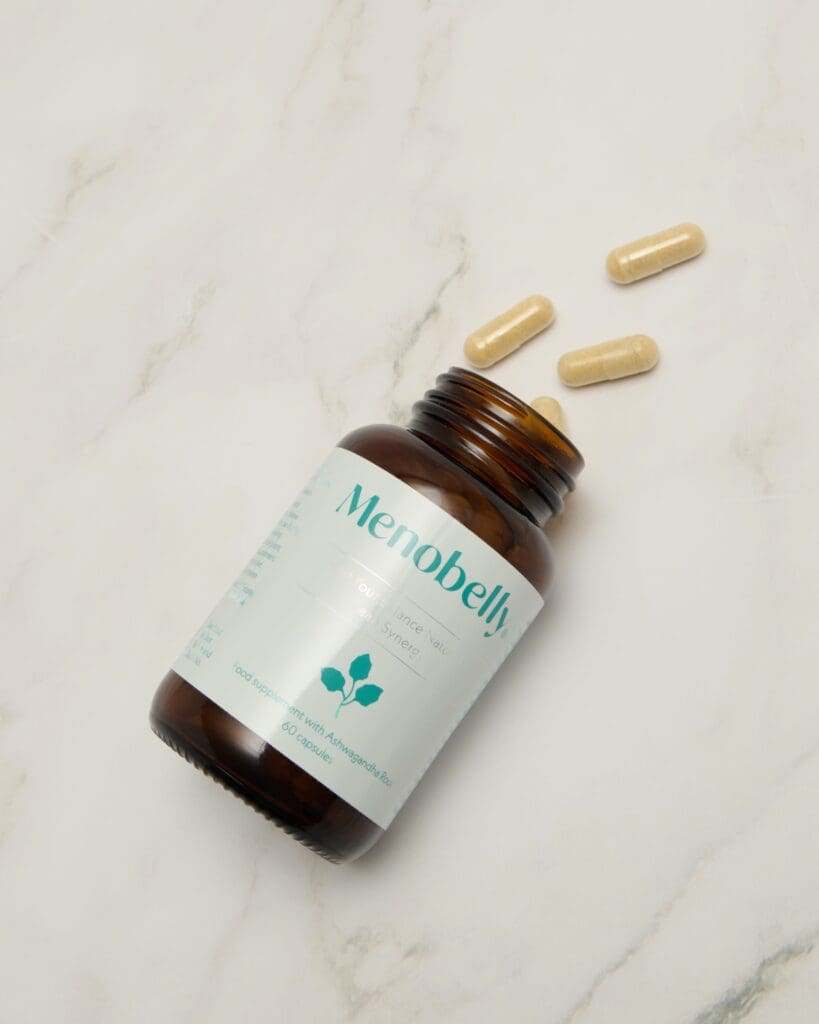
Menobelly is a premium supplement supporting weight management, specifically developed for women in midlife.
Its blend of botanicals, adaptogens and nutrients is designed to support:
- Healthy stress responses
- Metabolic wellbeing
- Blood sugar balance
- Energy levels
- Hormonal wellbeing during menopause
Key ingredients include:
- Ashwagandha (KSM-66®)
- Green Tea Extract (Greenselect®)
- L-Tyrosine
- Alpha Lipoic Acid
- Hop Extract
- Chromium
No fillers and made in the UK.
It’s not intended to replace healthy habits.
Think of it as additional support that works alongside the foundations of good nutrition, movement, sleep and stress management.
A Final Thought
If you’ve been doing all the things that used to work and wondering why your body seems to have changed the rules, you’re not imagining it.
Midlife brings genuine hormonal and metabolic changes, and they often require a different approach.
The good news is that thriving through menopause isn’t about extreme diets, endless cardio sessions or constantly starting over every Monday.
It’s about understanding what your body needs now.
By supporting blood sugar balance, managing stress, prioritising protein, building muscle and creating sustainable habits, you can work with your changing physiology rather than fighting against it.
That’s exactly why I created the 12 week coaching plan, to give women practical, realistic steps they can start implementing straight away – Click here to book a FREE 15-min call to find out more.
And if you’re looking for additional support, Menobelly our premium weight management support supplement can be used alongside the core foundations as part of your wider wellbeing strategy during menopause. Click here for more information.
This stage of life isn’t about getting your old body back.
It’s about feeling strong, healthy, energised and confident in the body you’re living in today.


