
February 17, 2026
Cortisol: The Missing Piece of the Menopause Weight Gain Puzzle
Have you ever looked in the mirror and thought, “I don’t feel like myself anymore”?
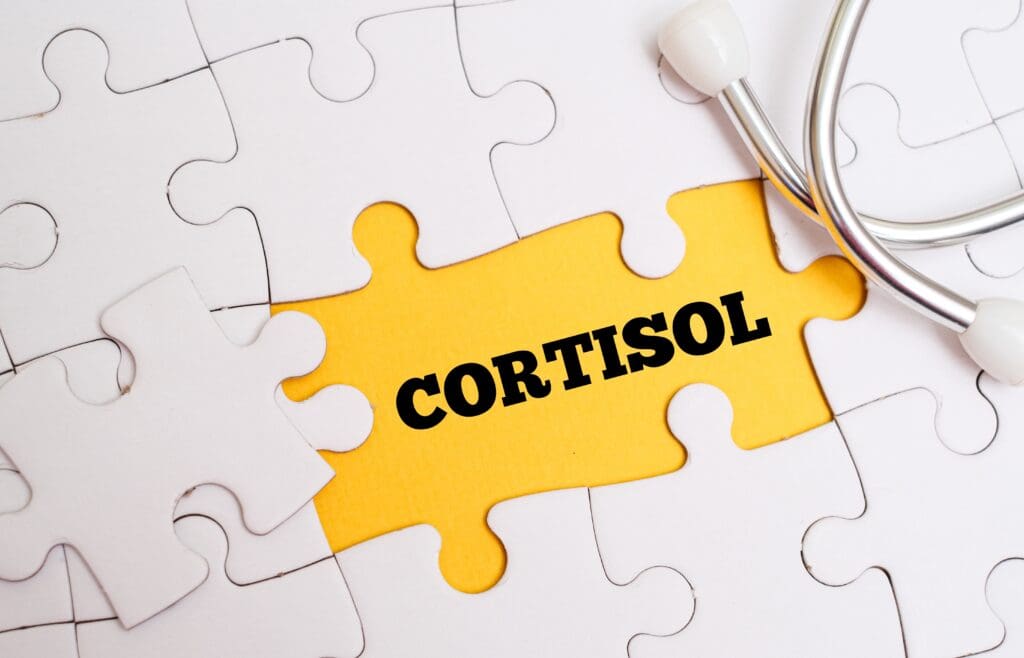
If menopause weight gain feels confusing and unpredictable, you’re not alone. Many women feel like they’re doing everything “right,” yet their body no longer responds the same way it once did. It can feel like trying to complete a jigsaw puzzle with a crucial piece missing – frustrating, confusing, and disheartening.
One of the most overlooked pieces of that puzzle is cortisol, your body’s primary stress hormone, which plays a powerful role in how your body stores weight, manages energy, and responds during menopause.
As a nutritionist and health coach working with women in midlife, I see this every day. Women who feel frustrated, confused, and disconnected from their own bodies.
Menopause isn’t just a hormonal shift – it’s often a life shift too. Children leaving home, ageing parents needing more support, and career pressures peaking can all add extra stress. Some people experience menopause earlier or later than average, and for those of us navigating it in our early 50s — like me, around the UK average of 51 – it can feel like balancing your own hormonal changes alongside life’s other demands.
It’s a lot. And your body is listening to every bit of it.
What is cortisol?
Cortisol is often called the “stress hormone,” but it’s actually essential for your survival and daily functioning.
It’s produced by your adrenal glands and plays important roles in:
• Regulating metabolism
• Controlling blood sugar levels
• Managing inflammation
• Supporting your sleep–wake cycle
• Helping your body respond to stress
Cortisol is designed to protect you. It helps you respond to challenges, mobilise energy, and stay alert when needed.
The problem isn’t cortisol itself.
The problem is when cortisol remains elevated for long periods of time, which can happen more easily during menopause.
Why menopause makes you more sensitive to stress
During menopause, oestrogen and progesterone decline. These hormones also play a role in calming and stabilising your nervous system.
As they fall, you may notice:
• Feeling more anxious than before
• Becoming more easily overwhelmed
• Reduced stress tolerance
• Poorer sleep
• Lower emotional resilience
This is not weakness. This is biology.
Your body is simply more sensitive to stress – and cortisol is more easily triggered.
How cortisol affects your weight
Many women blame themselves for menopause weight gain – but cortisol plays a powerful physiological role.
1. Increased fat storage around the middle
When cortisol rises, your body goes into protection mode. Blood sugar increases to provide quick energy. If that energy isn’t used, it gets stored – often as fat around the abdomen.
This is why belly weight gain is so common during menopause.
2. Slower metabolism through muscle breakdown
Cortisol can break down muscle tissue to release energy. Less muscle means a slower metabolism, making it easier to gain weight and harder to lose it.
3. Increased cravings and appetite
Higher cortisol increases cravings, particularly for sugar and comfort foods. This is your body trying to access quick energy – not a lack of willpower.
4. Disrupted sleep
Menopause already affects sleep. Poor sleep raises cortisol further, creating a cycle that makes weight management even harder.

The emotional load of midlife: the invisible stress
Many women at this stage of life are carrying an enormous emotional load.
You may be supporting:
• Children leaving home
• Teenagers struggling emotionally
• Ageing parents
• Career demands
• Family responsibilities
• Your own changing identity
You may feel more irritable, anxious, flat, or unlike yourself.
You may feel like you’ve lost your joy.
This emotional stress directly affects cortisol – and your weight.
Your body cannot separate emotional stress from physical stress.
It all counts.
Your body is not broken – it is adapting
This is one of the most important things to understand.
Your body is responding to hormonal shifts and life pressures. It is trying to protect you, not work against you.
The goal now is not to push harder – but to support your body differently.
How to support your body and lower cortisol naturally
1. Stabilise your blood sugar
Eat regular meals that include protein, healthy fats, and fibre. Avoid skipping meals, especially breakfast.
2. Eat enough nourishment
Undereating increases stress in the body. Nourishment creates safety, and safety helps lower cortisol.
3. Choose supportive movement
Walking, strength training, Pilates, and gentle movement help regulate cortisol without adding stress.
4. Prioritise sleep
Sleep is essential for hormone balance. Even small improvements can make a big difference.
5. Support your nervous system
Simple daily habits like walking outdoors, deep breathing, quiet time, or listening to something uplifting can help calm your stress response.
For me, listening to a funny podcast at the end of the day helps shift my nervous system out of stress mode.
6. Talk and seek support
You are not meant to carry this alone.
Connecting with others, whether through friends, community groups, or coaching, can have a profound effect on your emotional wellbeing and physical health.
I recently joined a walk and talk menopause group, and the relief of sharing experiences openly was incredibly powerful. Being able to support others and share knowledge made it feel even more meaningful.
You realise you are not alone.
This is not the end of your sparkle
Menopause is not the end. It is a transition.
With the right support, your body can find balance again.
You can feel calm, energised, and like yourself again.
Your sparkle is still there.
It just needs the right support to return.
Ready to support your body and feel like yourself again?
If you would like personalised support, you can book a free 15-minute discovery call with me, where we can explore what’s happening in your body and create a simple, realistic plan to support your hormones, nervous system, and weight naturally.
You can also support your stress response through targeted nutrition. Specific nutrients and adaptogenic herbs, such as ashwagandha and magnesium, are known to help calm the nervous system and support healthy cortisol balance. These are included in my Menobelly supplement, carefully formulated to support women through menopause. Find out more here.
Small, consistent changes can make a powerful difference.
You do not have to navigate this alone.

